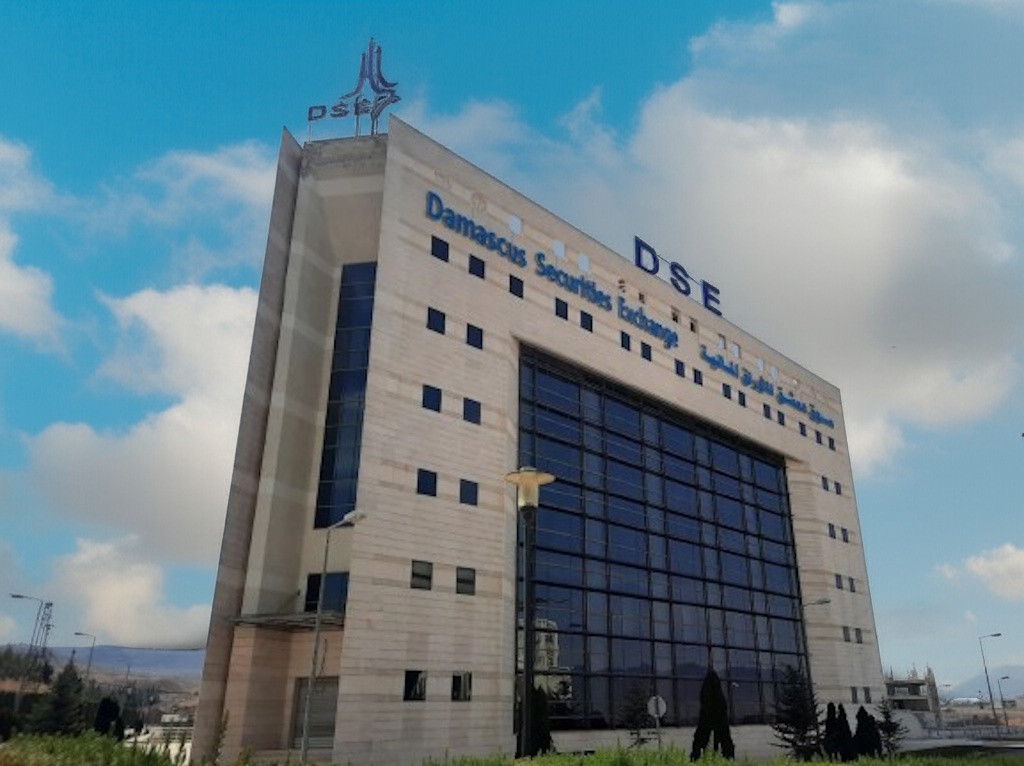
Trading resumed on the Damascus Securities Exchange this Monday for the first time in six months, marking a pivotal moment as Syria’s interim government moves to rebuild an economy devastated by years of civil war and authoritarian rule.
The reopening comes after the December ouster of former President Bashar al-Assad, and is seen as a cornerstone in the new administration’s efforts to shift Syria toward free-market principles. For decades, the country’s economy was tightly controlled by the state, stifling private enterprise and foreign investment.
At the reopening ceremony, Finance Minister Mohammed Yisr Barnieh announced that the exchange would now operate as a private company, aiming to become a central hub for Syria’s economic development, with a particular emphasis on digital innovation. Barnieh highlighted the government’s commitment to making it easier to do business in Syria and to attract new investment opportunities.
Of the 28 companies listed on the exchange, 14 resumed trading on Monday. Deputy director Sulaiman Mouselli explained that these firms had met the necessary disclosure requirements, allowing them to participate in the market’s relaunch. The exchange had last operated on December 5, shutting down amid the uncertainty that preceded Assad’s fall.
“Now, there is a renewed outlook and hope. We expect a very strong start,” Mouselli said.
The reopening of the stock exchange coincides with the lifting of major U.S. and European sanctions that had been imposed during Assad’s regime. Just last week, Syria signed a $7 billion energy deal with a group of Qatari, Turkish, and American companies to build new power plants and a solar facility—projects expected to supply more than half of the country’s electricity needs.
International support is also growing. Saudi Arabia and Qatar have pledged to help finance public-sector salaries, and U.S. officials have praised the sanctions relief as a bold move to help Syria escape decades of economic isolation.
Despite these positive developments, Syria still faces steep challenges. According to a UN Development Programme report, the economy has shrunk to less than half its 2011 size and could take more than half a century to fully recover at current growth rates. Today, nine out of ten Syrians live in poverty, and the country’s financial system is fragile, with people relying on a mix of Syrian lira, Turkish lira, and U.S. dollars due to the collapse of local banks.
“We want to be an investment country,” Barnieh told reporters, expressing hope that the reopening of the stock exchange marks the beginning of a new chapter for Syria’s economy.